Showing posts with label interviews. Show all posts

Monday, July 4, 2011

A conversation with Brian Eno

I had the great privilege of interviewing Brian Eno about his new album, “Drums Between the Bells.” He’s one of the gods that I can now cross off the list, and he was a completely kind, charming athlete of brilliance. I was terrified that I would wind up coming across like Chris Farley, but I think I did OK.

It’s always frustrating, though, how few of those kind, charming, brilliant words actually make it into a newspaper article, so here is a more thorough transcription. This is still not complete; it was just too long. But I think you get the idea.

How did “Drums Between the Bells” and your collaboration with Rick Holland come together?

I started working with words against music, rather than songs, quite a few years ago. Even in the ’70s I did a few early things where I was using spoken word rather than sung word. I became more interested in that direction as time went on. And I think it’s because I’ve spent a lot of time trying to look toward alternatives to conventional song structures. So if you think of “My Life in the Bush of Ghosts,” that was a sort of an alternative to ordinary songwriting in that it deliberately used voices that weren’t ever intended to be part of that song. So that collage thing was one of the ways I thought of getting away from ordinary songwriting.

You may be thinking, “Why did he want to get away from ordinary song structures?” Well, the reason was because I was thoroughly bored with them. The whole history of pop music had rested on the first person singular, with occasional intrusions of the second person singular: [singing] “I am this, I think this, and you do this, and you are this...” I was so bored with the idea of the whole song being based around some individual’s narrative. So I started working on ways to try to get rid of the idea that the voice in the song was the voice of the song — that was the center of the meaning of the song It’s a little bit like when people started melting figures into landscapes, so that you stop looking at a picture of a person against a background and started looking at a picture of a whole field of things, which happened to include a person.

I experimented many times with the idea of seeing what happens if you stick a spoken voice against a piece of music. And now, because it’s 2011, I was able to do a little bit more than that. I could choose exactly where the words fell and I could move them around and stretch them a little bit or change their pitch, or do all sorts of other things with them. So what I wanted to end up with was something that occupied a slightly different part of the spectrum between speech and song. So it wasn’t just speech and wasn’t just song, but it was some new hybrid in between.

Why Rick?

About eight or nine years ago I was thinking about this project, and in fact I had written quite a few poems of my own and tried this approach with them. I liked the approach but I wasn’t that keen on the poems, so I thought, “I need a poet!” I went to this event one evening, and there was this young man, Rick Holland, reading a couple of his poems, and they struck me as just the right kind of poems. They were short, which is important because I didn’t want the language to dominate the scene; I didn’t want a continual, wall-to-wall voice going though. And I wanted poems that were fairly unspecific in their language. Again, I didn’t want the whole thing to necessarily center around the voice any more than I’ve ever wanted it to do in anything else.

Some of the voices on the album reminded me of the robotic voices on GPS machines, where it’s often a female voice, which is often considered friendlier, giving help to a person using it. Did any of that enter into your mind, the character of the voices or what a voice type would imply about the kind of person?

One of the things that I kept listening to, and I’m always been fascinated by, are those automated announcements you get at railway stations. [Robotic voice:] “The — 5-4-3 train — from — platform 5 — is ...” Where it’s obviously all electronically collaged together from different recordings that weren’t made consecutively. And I think, “Ooh, that’s really nice. That’s a new way of voices sounding.” So I was quite consciously artificializing some of the recordings, and in fact almost the only instruction I gave the readers was, “Can you read it more slowly? Can you separate the words more?” Because I wanted it to feel that each word was individually pasted in, even though most of these poems were actually read consecutively.

Did you imagine it sounding strange or emotionally disconcerting to hear a voice like that?

I think what it does is it separates the voice from the kinds of emotions you might normally associate with it, so it becomes more emotionally ambiguous; it means there’s more interpretive space given the listener. Obviously, since it’s a voice we respond to it, just as any circle with two small circles and a curve inside it is going to look like face. We don’t have to have much information as listeners to make us interested in what a voice is doing and saying; we already are interested, just like we’re interested in faces. So I think what I was doing was playing on the fact that people have an inclination and a taste toward voices, and toward trying to interpret what they do, and seeing how far I could stretch them from being normal voices and still...

Sorry, I’m trying to switch a light on as I’m talking...

So can I ask you how many Brian Enos it takes to screw in a light bulb?

[Laughs.] In this case I only have one, and he’s failing... There, I’ve done it now. I’ve succeeded, so the answer is one.

Getting back to traditional versus nontraditional songwriting, did you even think of the words here as being lyrics that you set to music, or as a different kind of material?

I don’t think of them as being set to music. I like to think about them the same way as I like to think about film music, when I’m occasionally asked to do it, which is as a separate and parallel reality. I can’t bear Hollywood film music, because it seems to me it does the most pedestrian and obvious thing: it locates a single emotion in the film and then does its best to exaggerate that. It’s exactly the opposite of what I want from film music. I want film music to expand the film, to make it broader and vaguer in terms of its emotional implications. I don’t want to be told when someone’s crying that they’re sad, by some twit playing strings in the background, which is always the Hollywood resort. [American accent:] “Oh, this is a sad scene, let’s make him really sad.” And I think, “Don’t be so stupid!”

A lot of music is called experimental even if the audience already knows what it’s going to be like, and there is no actual experiment happening, for instance in idioms like free jazz or noisy electronica. Do you have to fight against doing something that is “experimental,” versus doing something where you don’t know what’s going to happen?

I don’t feel it’s a fight. I sort of take that as my brief that I’m always so thrilled when I find myself somewhere I haven’t been before. In my normal life I’m a very unadventurous person. I take the same walk every day and I eat in the same restaurants, and often eat exactly the same things in the same restaurants. I don’t adventure much except when I’m in the studio, and then I only want to adventure. I cannot bear doing something again, or thinking that I’m doing something again. Of course, like anybody I repeat myself endlessly, but I don’t know that I’m doing it, usually. [Laughs.] So when I’m in the studio what I really want to do is to find myself somewhere that I don’t recognize, and then try to see what’s there and what I can do and how I can get back, and whether I can successfully turn it into a useful experience of some kind. And I guess all of that is what is called experimental music, really.

I think of it as cowboys and farmers. Like in “Oklahoma!": “Oh, the farmer and the cowman should be friends.” So I think of cowboys as people who go out and look for new territory; prospectors, perhaps that’s the word I should use. And they use the territory for a little bit and then they move on to find new ones. Then there are other people, who have an equally important role to play — who for the sake of this metaphor are called farmers — who exploit the territory and look after it and nurture it and get slightly better results each year, and so on. So that’s another kind of temperament: craftsmanlike. I’m not really of that temperament. I like the thrill of putting two things together that nobody ever thought of putting together before. Or like a chef who uses some daring new combination of ingredients, black currants and sausages or something. That’s my thrill.

Is that in any way a reaction to your work as a producer, working with other people in a studio, where you might have to do the same thing over and over again, trying to get to a very specific result?

I don’t do that kind of producing. I don’t sit in the studio watching every overdub. I’m just not interested. I’m no good at that, actually. That’s a different kind of skill. What I do is, I walk in every so often and I listen and I say, “That piece fails in the middle. This piece is very exciting but it’s hasn’t realized its potential. This only has one good idea, and it’s that little flick in the drums at this point, and we should just start a new piece from that.” I tend to not talk on the detail level so much, but just have the benefit of not having been there during the nuts and bolts of the process. So I can walk in without any sentimentality and say, “I don’t think the guitar is working,” even though the guitar took two and a half weeks to record.

On the album, a lot of the lyrics — for lack of a better word there — kind of sound like artistic manifestos: “Pour it out in new ways,” “Invent new colors that fly,” that sort of thing. Was that the intention, instructions or a pep talk for artists? “Do something new”?

That’s a very good idea but it wasn’t the intention. No, I think that’s just in the nature of Rick’s poems. Something I’ve realized lately, to my shock, actually, is that I am an optimist, in that I think humans are really almost infinitely capable of self-change and self-modification, and that we really can build the future that we want if we’re smart about it.

I used to be much more pessimistic than I am in the way that most of us are quite pessimistic, civilizationally, don’t you think? Most people think, “Things are getting really bad, and it’s getting worse, and things are never going to be as good as they were X years ago.” So lately I’ve started to think that that is a bad civilizational habit that we’ve inherited. And it goes back a long way, right back to the Greeks. There were people saying exactly the same thing: things can only get worse, it’s going to get really bad, the whole place is falling apart. So I’ve stopped believing that, and I’ve started to think, “No, actually, the whole place is not falling apart. The whole place is consolidating, and getting better and better.”

I’ve been particularly influenced in this by few friends, Stewart Brand and Danny Hillis, both from the Long Now Foundation. Also by a couple British writers: Matt Ridley, who wrote a book called “The Rational Optimist,” half of which I think is a brilliant book, the other half I don’t quite agree with. [Laughs.] Matt’s point is that cultures have always been pessimistic because it’s very easy to extrapolate the bad news, as Thomas Malthus did, saying, “Oh look, population is rising exponentially but agricultural production isn’t increasing exponentially.” So, crisis looming, as Malthus thought. But what Malthus didn’t see was that there were going to be a series of agricultural revolutions. And of course he couldn’t see that; those were creative breakthroughs that nobody was in a position to anticipate. So the reason we have this cultural pessimism is because we tend to extend these trends into the future and think, “Oh dear, that looks bad.” But we don’t offset them with the possibility of the incredible creative power that the collective mind that we’re becoming has.

Matt Ridley used this term “collective mind,” and in fact that’s what we’re becoming bit by bit. We’re all becoming increasingly helpless as individuals. You and I — well, unless you’re quite a different man than I imagine you are — you and I would be dead within days if we had to fend entirely for ourselves. We’re part of this huge, rich network of human intelligence that keeps us all alive. In fact Matt Ridley has a beautiful illustration of this at the beginning of his book: he has a stone-age hand axe and a computer mouse. The point he makes is very simply that the hand axe was made by one person, but the computer mouse was made by millions of people. It’s impossible to know how many people were involved in the making of it, because the oil that made the plastic had to be discovered and mined and refined, and then turned into plastic, and then that had to be molded and shaped; somebody had to invent the computers, and so on. Every single object we use — this phone I’m holding now — is the result of this huge collective intelligence that we’re evolving.

A English writer called David Deutsch, he’s a physicist, has a new book called “The Beginning of Infinity,” and he has written chapter called “Optimism,” and it is so completely thrilling for me. I keep going back and reading it again, because suddenly I think, “Oh my gosh, the human race could not only save itself and save the planet, but really there’s no limit to what we can do.”

Anyway, all of this is a long diversion in answer to your question about were we writing a manifesto. I think Rick, like me, is an optimist. He has a kind view of humans. He thinks that we’re not doing a bad job, and we could do a better one, and we will do a better one. And so I think that that sort of suffuses what both of us does. There’s a sort of optimism in what we’re doing. Christ, that was the longest and most roundabout answer to your question, I’m sorry.

No, you just gave me about three books to read, so I appreciate it!

The collective hive mind idea, is that what you’re thinking about when you mention Spotify, and the fact that digital music lets us churn through decades and decades of music like we never have before?


Yes. The only problem with phrase “the hive mind” is that it gives you the impression of interchangeable units, of cells that are really quite irrelevant to each other, that don’t matter. But in fact what humans are doing is really a very different sort of experiment. This collective mind is actually filled with specialists, people who increasingly are becoming good at unique things, in the sense that you’re a specialist writer, I’m a specialist musician. Probably nobody’s going to replace me exactly. I don’t mean I’m irreplaceable. [Laughs.] But nobody else is going to do exactly what I do and nobody else is going to do exactly what you do. So it’s not really a hive in the sense of being filled with Orwellian drones. It’s a different kind of hive. It’s a hive full of singular intelligences.

I read something very interesting recently, which is that in last 40,000 years the human brain has deceased in size by about 10 percent. I think that’s because we’re all becoming better specialists, and we don’t need to be generalists in the same way. You don’t have to know how to find meat or to cook bread or to plant this or to chop that. You don’t have to know that because you know other people who know how to do it. What you have to know is what you do, and you have to be good at that. So I think we’re actually turning into a different kind of creature, and I rather like the creatures we are becoming.
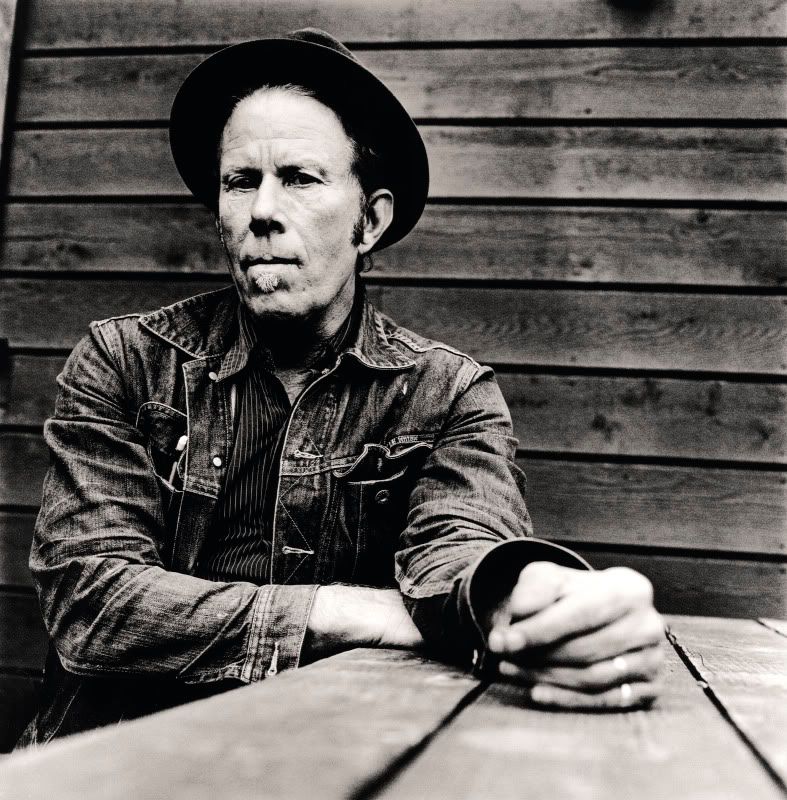
Ancient futurism: Tom Waits, Roberto Benigni, Thurston Moore, Al Green, Lou Reed, Questlove, M.I.A.

Tuesday, April 19, 2011

Tuesday, March 29, 2011

Questlove on Clyde Stubblefield

I interviewed Clyde Stubblefield, who was one of James Brown’s key drummers from 1965 to 1971. He played on “Cold Sweat,” which needs no introduction, and “Funky Drummer,” perhaps the most sampled beat ever.

It was an honor to talk to Clyde. It was also an honor to talk to Ahmir Thompson, a.k.a. Questlove of the Roots. We all know how great a drummer Ahmir is, and most probably also know that he’s a scholar and a very thoughtful guy about music. But I was still surprised by how insightful and eloquent he could be just speaking off the top of his head. Perhaps I shouldn’t have been. But his interview was too good to leave at two short quotes.

So here’s our full conversation, minus some shop talk at the end when he referred me to Alan Leeds, who was Brown’s tour director at the time and is a primary historian on all things James Brown. (With Quest’s help I did reach Alan, who was awesome. He has one of the more incredible behind-the-scenes careers in music: after Brown, he worked as the tour manager for Funkadelic, then for Prince for most of the 1980s, and later for D’Angelo.)

One thing that did surprise me about Quest, though, was that he talked a little like Mr. Micawber
.

Ahmir: In short, there have been faster, and there have been stronger, but Clyde Stubblefield has a marksman’s left hand unlike any drummer in the 20th century. The thing that defines him, that sets him apart from other drummers, are his grace notes, which are sort of like the condiments of what spices up the main focus. The main focus of music is always the 2 and the 4, especially with the snare drum. And what lets you build your personality is how you dance around that 2 and the 4. The technical level of dynamics of his left hand, his ability to flam a 32nd note very silently, but a 16th note very loud and commanding. It takes a very, very specific marksman, in their Navy SEAL precision, to execute it perfectly. In short, it is he who defined funk music, more than anything.

Me: Was Clyde James Brown’s best drummer of all?, Better than Jabo, Bernard Purdie, etc.?

I’ve learned that to use good and bad, or to use best and worst, is not apropos. I believe that Clyde was the most effective drummer that James Brown has ever utilized. Jabo was his most powerful drummer, but Clyde was the most effective.

James Brown used all his musicians as percussion players; it’s just that the other nine musicians were melodic players. They basically played a loop. Very rarely would a James Brown song go to linear thoughts, where you didn’t know what was coming next. It’s a four-bar loop every time, very disciplined, very tight. Clyde’s whole gift is that he was able to incorporate everyone’s role in it. The main kick and main snare are kind of like the traffic cop, but the hi-hat could emulate what the guitar was doing. His snare work really emulated Jimmy Nolen, and a lot of their rhythms were very precise 16th and 32nd notes.

I felt as though Clyde was the most effective in completing the puzzle. His grace notes, his softest notes, defined a generation. It’s like the kind of ketchup you use, the things that surround the burger, as opposed to the burger itself.

Did Clyde have more influence as a drummer, on actual James Brown records, or as a sample?

More influence as a sample, hands down. Clyde’s influence is more unique than his actual work for James Brown.

It’s kind of weird, but I think his work with James Brown is too potent. As a DJ, I rarely play “Funky Drummer.” I rarely play “Soul Power.” But probably the record of choice, that has just enough sugar for the medicine to go down for most DJ’s, is the live version of “Give It Up or Turnit A Loose.” That’s a b-boy anthem, for most dancers. That song right there can be handled in a single dosage in a club. It’s like a jalapeño: you don’t want to just eat up the whole jalapeño, you want to cut it up and use it to spice your foods. And no, I won’t just use food metaphors here!

What about other popular samples, like the “Amen break”?

“Amen” and “Apache” were also very influential, and they had an influence in Europe, on jungle, drum ’n’ bass. But for the true experts of drum ’n’ bass, the “Soul Pride” break is hands down the go-to break. And that has really inspired a movement of great dance music: drum ’n’ bass, not to mention Baltimore house music. Baltimore house is still a subgenre; it might not be the next big thing that people predicted three or four years ago. But it’s still a phenomenon.

“Funky Drummer” has done miracles for hip-hop. It’s the traffic cop. The greatest hip-hop album of all time, “It Take a Nation of Millions to Hold Us Back” by Public Enemy — it’s all over that record. And that was intimidating to me. On Tuesday we’re doing “Fight the Power” with me and Clyde on drums, and Chuck D. That song is basically “Soul Pride” on steroids.

Does that mean that Clyde’s whole influence through the “Funky Drummer” sample distorts who he was as a musician? Since people weren’t really hearing the whole picture of who he was, just hearing a five-second break?

He’s like the ghost in the machine. When you talk about the most perfect beat, it’s not even that “Funky Drummer” wins in a technical aspect. But in an artistic aspect, it’s hands down the most perfect beat you can loop — it’s very lyrical, very melodic, very rhythmic. It’s perfect. It’s magical. Everyone I know as a producer, that’s gotten their start hip-hop production, they all have their story about the first time they heard “Funky Drummer.”

When I first heard “Funky Drummer,” I had James Brown’s “In the Jungle Groove” album. I gave it to my father as a Christmas gift. I knew he liked James Brown. I had that album for like four months. I don’t know why or how we let it sit for so long without investigating it. Maybe it’s because “Funky Drummer” was the only single during James Brown’s hit period, of roughly 1965 to 1975, when he had something like 70 top 10 hits, it was the only single that never reached the top 10.* Ironically, it was also one of Clyde’s last sessions with the James Brown Orchestra before Bootsy and his team came in.**

On Tuesday we are getting him to sit in with us. But any time I’ve seen Clyde footage of him playing somewhere, I’ve always been chagrined they have him on a new drum set that’s horribly tuned, so it sounds nothing like Clyde from the 1960s. So this time I am personally bringing out my 40-year-old Yamaha kit for him.


* Not quite, but you get the idea. Between 1965 and 1975, James Brown had 65 songs in the R&B top 40, and 44 of them reached the top 10. (“Funky Drummer” reached No. 20.) On the pop charts for the same period, Brown had 37 top 40 hits, 6 in the top 10.

** In March 1970, most of Brown’s band mutinied, demanding better treatment and pay. Brown fired them and put together an almost entirely new group, including the young Bootsy and Catfish Collins; that new band became known as the JB’s.

Clyde’s history is a little confusing at this point. According to Alan Leeds, Clyde was not present during the 1970 mutiny; he had left in December 1969, and he returned in June 1970 for a stay of about six months. (Note that Clyde played on “Get Up, Get Into It and Stay Involved,” recorded in November 1970.) Leeds says that Clyde next left again in late 1970: the band was going to Africa and Clyde had a problem with his paperwork. He returned for a short period in late 1971, and then left for good.

Thursday, May 27, 2010

V.I.P. ticketing on Soundcheck

I was honored to talk about V.I.P. ticketing today on Soundcheck, where I uttered an unintentional howler: artists, I said, are “horrified and jealous” by the prices scalpers get for their tickets. John Schaefer didn’t miss a beat on that one.

Here’s the show, in a nifty embed.


And here is my story from the other day on the same topic.

Tuesday, May 25, 2010

Talking ‘Exile’ on WFUV

Photobucket

The good people at WFUV asked me back to chat about the reissue of Exile on Main St. Listen here, subscribe here.

I’ll be back there next week to review the new Teenage Fanclub.

Wednesday, May 12, 2010

Sweetback: the ‘hood opera’ version

For a limited (?) time, the French TV network Arte is running a complete web video of Melvin Van Peebles’s musical theater/‘hood opera’ version of his classic 1971 film “Sweet Sweetback’s Baadasssss Song,” as done earlier this year at the Sons d’Hiver Festival in Paris.

Back in January I interviewed the endlessly fascinating Mr. Van Peebles as he prepared a few workshop performances of the piece at BRIC Studio in Brooklyn. Fans of the film will find the plot alterations and additions interesting; everybody else will just dig the baadasssssness of it.

Arte has helpfully tagged a few highlights in the video, like Beatle’s “public relations business” spiel (47:00), a new speech and song about that unattainable “sweet old utopian American apple pie” (37:30), and, for the pervs out there, the bordello sex party (27:50) and the fucking contest (68:00). At the end, maestro Melvin grooves onstage and addresses his crowd en français.


Monday, March 1, 2010

A conversation with Philip Glass and Robert Thurman

“There are forms of idealism which may not be realized, but that doesn’t mean they aren’t functional and important.”


Two conversations, actually. I was honored to interview two of the founders of Tibet House US, for a story about their 20th benefit concert.

Robert Thurman is a professor (and a dad), and Philip Glass you know. They, along with Richard Gere, started the New York Tibet House in 1987 — there are others around the world — “to ensure the survival of Tibetan civilization and culture, whatever the political destiny of the six million people of Tibet itself.”

So from the beginning it had a cultural mission, but with a fraught political context. Tibet was invaded by Mao’s Communist forces in 1950, and the Dalai Lama has been in exile since 1959. Today Tibet is still a forbidden word in China — it symbolizes the ugly truth about authoritarian rule, which can’t be erased by free trade and tourism.

Both Thurman and Glass indulged me with long, thoughtful conversations that couldn’t be summarized in an 800-word article. They have revealingly different perspectives. Thurman believes that political reconciliation with China is inevitable; Glass, less sanguine on that point, is interested in how a refugee culture survives, and the effect it has on the rest of us. (“What we’ve gotten good at as human beings is surviving outside of places where these things began,” he says. “It’s maybe not ideal, but it’s actually what really happens.”)

Here are excerpts from these conversations, which took place separately at Tibet House in Manhattan on Feb. 22, 2010.

1. Thurman

Two decades in, how do you see the success of Tibet House as an organization? Things have not gone so well for Tibet in that time.

I know, yes. People say that the fame and the popularity of the Dalai Lama haven’t helped Tibet, because China is still oppressing Tibet, and they’re still doing basically ethnocide — trying to absorb and assimilate the Tibetan people into the Chinese people. So they say, What’s the point?

But we don’t feel that’s an accurate analysis. People often say that this nonviolent approach, hoping for dialogue with an oppressive colonial invading power, and preserving culture, appealing to positive causes, even appealing to Chinese positive side — is pointless, that you have to actually fight for independence. Even some young Tibetans say that.

On the other hand we would point to Afghanistan and the Palestinian situation, and many others around the planet where violence has not helped in 30 years or 40 years — or 50 years, actually. Although the Tibetans periodically resist, they are oppressed daily. Many have been imprisoned. Over 1 million have been killed. Tons of their cultural treasures and monuments have been destroyed. There are still 6 million Tibetans alive in Tibet and they are somehow surviving. It takes long time to get a dictatorship to change its behavior, but it is changing. And the Tibetan culture is quite popular underground in China. The Chinese people have been oppressed themselves for 60 years, since Mao. If they do another violent revolution like Mao led, that wouldn’t necessarily get them a better situation.


So in other words nonviolent change is something the world not used to. And change by preserving culture and cultivating people’s positive attitude, people are not used to. But we feel it is quite successful. The people of the world, most of them know about Tibet. They care about Tibet. Even many people in China know and care about Tibet. So it’s a matter of time before the world system changes, where the governments will actually have to listen to their own people, which they still are not doing. They are basically militarists, most of them, corporate-driven. And democracies are not working well — look at ours. The world is being pushed to its own limit.

I like to think since James Cameron’s brilliant work that the Tibetans are like the Na’vi. They’re hanging in there. Maybe not fighting with bows and arrows, but they still are staying connected to nature, and we think they will prevail.

Is the political situation in Tibet discouraging?

Sure, it’s discouraging for everybody. But the one thing I find encouraging is that the oligarchies controlling all the different countries and running the planet into the ground for money are so incompetent. They keep screwing up! It’s so wasteful. Their banks are crashing, their wars are failing — everything is going wrong for them. The fact that they’re acting so desperately and so irrationally I find encouraging, because it seems they somehow sense that beneath the goose-stepping and marching around that they are losing their hold. Like China for example, trying to be popular by doing the Olympics and then goose-stepping around, arresting old ladies who protest their houses being bulldozed, and running around the planet frantically trying to prevent anybody from having tea with the Dalai Lama — supposedly super-powerful guys afraid of a little monk who cracks jokes and wanders around in sandals in the snow. Come on. It’s so silly.

But last week when Obama met with the Dalai Lama, they still kept it semiprivate, and whisked him out a back door by the garbage.

People make a lot of that, but the only reason the garbage was there is that they had a snowstorm in Washington that they don’t know how to deal with. I don’t think people should get overly worked up about that. I’m sure the Dalai Lama himself would have urged Obama, don’t rile them up too much, you don’t have to make a big fuss. People around the Dalai Lama can make a fuss and say he was treated with indignity and blah blah blah. But the Dalai Lama doesn’t care. Look at him, wearing sandals with a big grin on his face.

The point is, he’s not into confrontation. Years ago the Dalai Lama refused to go into the UN, a building he’d been dying to visit for many years, because he loves that kind of thing. But he refused to go with the late Jeane Kirkpatrick, who was known as a super right-winger neo-con, because he didn’t want the Chinese to be able to shout and scream that he was a neo-con himself. He never asked to condition most-favored-nation status. He never challenged their right to hold the Olympics. He tries to be super-conciliatory. He’s happy to go in and out of back doors.

He was glad to meet Obama. I know he had met him before as a senator, and it is important that he does meet him and that China fails in their efforts to prevent him from meeting heads of state. Because that’s how he keeps alive the awareness of Tibet. But he doesn’t want to do it that confrontationally. He wants to give the Chinese face-saving things, and he wants them to relent. Because after all they are the ones who are paranoid about him, and they are the ones who have never met him. If they met him they would calm down. They would stop being so freaked out. They might feel a little guilty and penitent about some of their bad behavior, because you do in the presence of a person like that. But they would relax. Unfortunately their system is such that they are scared to meet him, and they never do.

You wrote a piece for the Huffington Post last week saying that “the Dalai Lama wants Tibet to be a fully contributing part of China,” that the Chinese are wrong to accuse him of wanting to split Tibet away. But why doesn’t he? This is the force that has occupied his country for decades, killed thousands of his countrymen.

Some of them have done that. The head of the secret police; Hu Jintao is himself very guilty of harshness and violence and murder when he was there, and is condoning it even today. A guy named Changchun Li who is in charge, is a complete thug, a Communist party boss.

So yes, the Dalai Lama acknowledges that everyone in the world likes to be free. The Tibetans are famous for their complete individualism, being semi-nomadic people living at high altitudes, wandering in their tents. But the Dalai Lama says to his people — and I think he’s correct — that at this stage, the way Tibet has been handled, it is better for Tibet to be affiliated with one of the big powers. Especially because that power has de facto been in control of it, has a lot of people there, has a lot of military there, and has done a lot of damage — and has the means to repair that damage should they turn their policy around. That means it would function better for the benefit of China in a federation, as China pretends that it is in federation with what it calls its minority nationalities.

Furthermore, the Dalai Lama is fully aware that the Tibetans can relate positively to the Chinese. They have been a helpful neighbor to the Chinese in past centuries. They have ameliorated the harsh control by Mongolians and Manchurians when they conquered China, and got them to treat the Chinese more nicely. The Tibetans are Buddhist masters, and the Chinese like Buddhism. There are hundreds of millions of Chinese Buddhists. The Chinese desperately need spirituality.

The Dalai Lama is aware that if the Chinese continue in their neo-colonial and neo-imperial behavior with Russia, with India, with Central Asian Islamic republics and their own Muslims, then there will be so much violence going in Asia that even a free Tibet would be overrun with nuclear war. Imagine the millions of Chinese Buddhists who would appreciate teachings from the Dalai Lama. Westerners come in the tens of thousands nowadays, but the Chinese would come in the hundreds of thousands. And they would benefit from the Dalai Lama’s representations and his walking the talk of Buddhist ethics. So as a peacemaker and as a religious leader he likes to have a hand in China. And it would be a tremendous help to the reawakening of China as a spiritual entity, which they desperately need, because their greedy consumption of the world’s resources and their overproduction of crappy goods, etc., for consumers is part of the planetary destruction.

To change China into a cooperative 21st-century power, and get it out of imitating the 19th-century behavior of Britain and the 20th-century behavior of the U.S., is a really important thing. The Tibetan people can be of more help from within China than they can as some kind of bereft, isolated, autonomous and wrecked, devastated place. So the Dalai Lama is politically and socially and historically deeply insightful. But it’s hard for people to recognize it because they think of powerful people as having tanks and planes and bombs. Those he doesn’t have and will never have. [Laughs.]

2. Glass

How did you first get interested in Tibet?

Totally by accident. I went to India in 1966. I had just been working with Ravi Shankar in Paris. I got interested in his music, and I was interested in some of the teachers there. I was up in northern India and I saw a refugee camp. And I said, “What’s this?” I didn’t know. They said, “It’s a Tibetan refugee camp.” I said, “What are they doing there?” I missed that bit of news. It had only happened a few years before, and many of us didn’t know about it.

I began meeting people there, and when I came back to New York I wanted to know more about it. I met the Dalai Lama’s representative in New York at that time, and I just got to know people. At the time there were three Tibetans living in New York; I knew the whole Tibetan population. Very soon other people came and then I began going back. At that time I was going down to Freehold, N.J. That’s where Bob Thurman and a number of these guys were studying Tibetan. The first wave of translators were studying in Freehold, N.J., not with a Tibetan guy but a Mongolian guy, Geshe Wangyal. He was teacher for a lot of these people. These were the really early days. It was really quite a few years later, in 1987, that we started Tibet House.

It started very small. It’s astonishing how it’s grown. I was at the Rubin yesterday giving a talk. I was at bookstore, and you look at that books that are published. I can’t even find the old books anymore. It used to be that there were only about eight books on Tibet, and I had them all. Now there are 800 or something like that. It’s a measure of how attractive this culture and these people have been to Americans that it has grown and taken root so widely.

How successful has Tibet House been with its mission over the last 20 years?

It’s changed over time. When we began, the refugee community was not nearly as well established as they are now. You had men who had spent their lives studying religious texts wrapping packages at Macy’s, and stuff like that. You had these very disproportionate things where people of great education and stature were starting at entry-level jobs that were way beneath them. You have to remember also that most people didn’t know where Tibet was, let alone that it had been invaded.

We began Tibet House at the request of the Dalai Lama. His idea was to have these cultural centers that would keep alive and make people aware of the authentic and independent culture. I’m not talking about the politics, just the culture. We’re talking about a country with its own language, its own history, the whole thing. So Tibet House as a whole has been functioning in that way. Now we have been upstaged in a wonderful and a magnificent way by the Rubin Museum. I love that museum. [Laughs.]

We’re a rather small place, but we go public very big at the concerts. And that has been helpful to make people aware of Tibet House as an institution, and what the mission of Tibet House is. And as I say, that has changed. Over the years the Tibetan community has been very successful in getting integrated economically in America. Now we have a generation of Tibetan kids who were born here. They have Tibetan summer camps, just the way all the immigrant communities have maintained their identities, whether they’re Italian, or ... I was going to say Jewish, but it’s hard to say what the Jews were, a country or a tribe. You know, we talk about doctors without borders — we’re talking about a country without borders, until recently. [Laughs.]

As this has evolved people have become more aware. The Dalai Lama getting the Nobel Peace Prize and becoming truly an international person, someone that people acknowledge in a spiritual and ethical and moral way as a world leader. You have to go back to Martin Luther King and Gandhi to find a person of that stature in the world. And as his stature has increased, so the visibility and credibility of an independent culture has grown. We began as a kind of beacon: “Here we are, don’t forget us!” Now it’s become like a celebration of a culture which is surviving in a way no one expected it would.

Do you think people in America view the Dalai Lama and the Tibetan cause as a losing battle?

I don’t think so. A losing battle politically, geographically, perhaps. But culturally, no.

Those are important, though, the political and geographical sides of it.

It’s one slice of it. But don’t forget, in this country we have all kinds of refugee cultures that come here. The Jewish people came here, the Armenians came here, the Ukrainians came here. All these cultures that had to leave. We have a big history of that.

But isn’t the whole thing with Tibet about exile and the hope to return?

Of course. And you go to a Passover thing, they’re still talking about returning. We’re talking 2,000 years. That doesn’t mean it’s going to happen; it also doesn’t mean it isn’t important. There are forms of idealism which may not be realized, but that doesn’t mean they aren’t functional and important. The idea of return is also a way of hanging on to a cultural history. In other words I don’t take it literally. But I’m not Tibetan and I don’t have to. And I think many people don’t actually expect it to literally happen. But what we’re talking about is the survival of a culture, the survival of a lineage of teaching, the survival of a music and an art and a language, and all the things a culture entails. What we’ve gotten good at as human beings is surviving outside of places where these things began. It’s maybe not ideal, but it’s actually what really happens.

The benefits of a refugee culture have been tremendous. It’s had a big impact on America. When the Tibetans left Tibet they took with them an ageless culture. Not ageless exactly, but they had preserved in the Himalayas in a pure form things that had been lost in other countries, and they brought it here. And the benefit in this country is tremendous. How do we look at it as Americans? It might be a slightly cruel thing to say, but we’ve been the beneficiaries of an exiled community, as we have been with the Italians, and with the Ukrainians, or the Jewish people, or the African cultures that came here through slavery. America is a very dynamic and vital place and partly because of our ability to absorb these kinds of things.

In a way you could say I’m begging the question. But this is a question worth begging, because the answer is what we know about. It’s what we’re actually living with. We can talk about going back to Tibet some day, but what we’re really dealing with is the benefits of learning from a culture which no one would ever have even known about.

Ancient history: Tom Waits, Roberto Benigni, Thurston Moore, Al Green, Lou Reed, M.I.A.


Monday, January 4, 2010

More decade stuff: Return to WFUV

Photobucket

I’m not quite done with the decade yet. Still have to do postmortems on my 2007 and 2008 lists, and then of course finish up my 2009 list. I spent the holiday weekend unpacking, centering and leveling picture frames, and re-alphebetizing records, so I’m running behind. Soon, I swear.

But first. The good people at WFUV, where for two years I reviewed records every week, invited me back for a special end-o’-decade show. Claudia Marshall and I talked about a few of my shoulda-beens for the decade: amazing albums that did not get the attention they deserved at the time, and are getting even less now. Find out what I chose tomorrow morning at 8:30, on 90.7 FM in New York. They also podcast it here.

And now back to lists for me.

UPDATE: Here’s the link for the audio.

Thursday, October 8, 2009

Kyp Malone on Popcast

Tooting own horn dept.:

This week on Popcast, the Times’s weekly music podcast, we have a visit from Kyp Malone of TV on the Radio, who sat down for a friendly interview and played a song live from his new solo project, Rain Machine. It was pretty cool to watch his voice wake up over the five minutes or so of recording the song, “Free Ride.”

The segment also includes Jon Pareles on Gossip and Ben Ratliff on Fred Hammond. Listen to it here, and subscribe to Popcast here. Rain Machine is on tour now, coming to the Bowery Ballroom on Oct. 24 for CMJ.


Friday, September 25, 2009

A conversation with Tom Waits

“Songs drive along the same neural pathways that dreams do. So using them — misusing them — to sell hairspray, it just seems obscene.”

In 1988 Tom Waits sued Frito-Lay for using a sound-alike in a Doritos commercial, and won $2.5 million in damages. That case, and a similar one by Bette Midler, became landmarks in establishing an artist’s right to his or her voice. But Madison Avenue was undeterred, and for the next two decades Waits would fight many advertisers who copied his distinctive vocal style without permission.*

It happened again in 2005, when Audi and Opel used suspiciously similar-sounding singers for European ads. Waits sued both companies. I wrote a news item, and got a quote from Opel saying they had never considered Waits for the ad — despite a paper trail clearly showing that they had approached him and been turned down flat.

Waits was apparently so pleased with this that he agreed to an interview about it, something he doesn’t often do. I remember picking up the phone around 6 p.m. on Jan. 18, 2006, and hearing, “It’s Tom!” We talked for about 45 minutes, and although the resulting story turned out fine, it was frustrating how few of his marvelous quotes made it into the piece.

Here is a transcript of our conversation, minus a few trims for redundancy or irrelevance.

It must be extremely time-consuming and expensive to pursue these cases. Why is it so important to you to do this?

I ask myself that sometimes. Because there are things I would rather be doing. It does take a tremendous amount of time, energy and money. But in a way you’re building a road that other people will drive on. I have a moral right to my voice now. It’s like property. There’s a fence around it, in a way. In Spain now there’s such a thing as moral rights. So that’s a good thing.

In both these cases — the Scandinavian/German Opel thing and the Spain Audi deal — they called me first to ask me if I would do the commercial. Then, when I politely declined, they turned around and hired an impersonator. So they’re really left hanging out there in the wind legally, since I had documentation that they asked me; it only strengthened my case. But there’s plenty of other situations where they just out-and-out do it. There’s a whole sound-alike industry, and it has to eat too. Like flies at a picnic, you know. “Enjoy your lunch, but we live here too.”

Why do you think they want a voice like yours selling cars and salty crackers?

Maybe it’s because I don’t want it. They want me more. Or maybe over there they think that I’m just kind of a nobody. “I found this really weird guy in my record collection. I think he’d be good for the Harley Davidson account or something.” I don’t know.

Does it happen a lot, given that the Frito-Lay case is such a well-known precedent?

It does. I get people that usually call me, say, “Hey, I saw this ad. Sounds just like you. I didn’t think you did ads.” I don’t!

Why not?

It’s part of an artist’s odyssey, discovering your own voice and struggling to find the combination of qualities that make you unique, whether you’re Yma Sumac, or Walter Brennan, or Caruso, or William Burroughs, or Sister Rosetta Tharpe — you shape yourself. It’s kind of like your face. You’ve got an identity. It’s like a fingerprint. So now I’ve got these unscrupulous doppelgängers out there. [Laughs.] My evil twin who is undermining every move I make. That’s the way it feels.

You’re as defined by the things you say yes to as the things you say no to, right? So if you saw Ralph Nader lying in his underwear stroking a panther on a billboard, would that impact his position in the public’s mind on global warming? Hell, it would change whole definition of global warming! [I laugh.]

Does it offend you more that somebody is copying you, or that they’re doing it to sell a product?

I don’t mind if someone wants to try to sound like me to do a show. I get a kick out that. They got these bands over there in Europe that do my songs, have a singer with a really deep voice. It’s my own little raggedy version of Beatlemania. [Laughs.] These little bar bands that try to sound like me.

But the product stuff, it bugs the hell out of me. The idea is to make it so commonplace that you barely notice that the whole world is being dominated and controlled by big business. I didn’t get into this to write jingles. I’m trying to have some effect on the culture, and my own growth and development.

I make a distinction between people who are using voice as a creative item and people who are selling cigarettes and underwear. It’s a big difference. We all know the difference, and it’s stealing. They get a lot of out standing next to me and I just get big legal bills. It’s like someone coming into your house and stealing something. It slowly erodes my own credibility. So that’s a pain.

Most of these companies operate more like countries than companies. They’re so large. And the way they behave is kind of like the might and the right of a country, the way they roll over you. They don’t think anything of taking something that they want, because they’re going to get a parking ticket. And it doesn’t even ever reach the brain of the company. The news of this is just like gum on the bottom of their shoe.

When it comes to the face that most of them want to put on for the public, they don’t want to wear corporate feathers. They masquerade more like one of us. So that’s why want to wear your music. It’s the first thing that gets your attention: “Hey, I know that song.” Now they’ve got ya — that’s the foot in the door.

You said that you’re “building a road.” Do you get support from other musicians?

To be honest with you, I think it’s gotten rather flea-bitten. But there are several people that are scrupulous, and they really stand next to me. Neil Young’s against it, Springsteen’s against it, people like that. Those guys are big guys.

But for the most part I think the idea is that ultimately the only way you will be able to get exposure is by tying yourself to a new car. Out on the hood. I think it’s getting like that now. You try to make a voice, and get heard, but it’s getting to the point where — like these blue-jean ads, and all that. Nobody thinks anything of it, for the most part. They think, “Oh, I saw you in a magazine, man, that was cool. How you doin’?”

Do you feel that you’re part of a dying breed?

I’m not dying, and I’m still breeding. I only know how it is for me. I can’t really legislate my own morality about it. I know how I feel about it, and it just doesn’t go down right for me.

You’ve done well financially with these cases, right?

It barely comes close to scratching the surface of your legal bills. I think with the Spain thing it was 70,000 euros, or something like that. That’s like a couple of days with a lawyer over there. Plus you’re hiring people 5,000 miles away. You have to stay on top of it. It’s a pain. It’s like making dinner at the bottom of a swimming pool.

Do the lawsuits interfere in making music?

Oh, yeah. You gotta get on the phone at 4 in the morning with guys who don’t speak English. It’s no fun. I have a certain amount of zeal about it, and my wife has got a really great mind for this. She’s always been in my corner. We kind of slug it out together, like a tag team.

Can you quantify how much of an investment it has been for you to pursue these cases?

Oh, Jesus. I don’t really know. Millions! No, not millions. But I’ve had a lot of them. Some of them settle. You go, “OK, you gotta put an apology in the paper.” In Italy, man, it’s really crazy over there. They’ll just take a record of yours and they’ll put a new cover on it and they’ll glue it to the front page of their daily paper. And they’ll say, “Get the paper, and for an extra 50 cents you get this Tom Waits record.” Stuff like that. They just do it. And you just go, “What?!” Is the record selling the newspaper, or is the newspaper selling the record? Which is it?

How many of these suits do you have going on now?

This one [in Spain] just wound up with a decision. This other one in Germany, Opel — they asked me to take the Brahms Lullaby, sing the melody of it, add some kind of phony words. I said no. So they did a car commercial, putting a car to bed in the ad, and they hired a guy that sounds just like me doing it. So we attacked them. [Laughs.]

Whatever you do to create something unique in your voice, it’s a spell that you’re able to weave with it. The ads kind of lay eggs in your brain. They’re getting more and more expensive. They get really insidious. And then there’s more and more people that you don’t think would ever do them, doing them. You can’t believe it. It’s like, “Why are you doing that? You don’t need money.”

You think the Who needs money? They got to do car ads? So why do they do it? Because I think they think they feel current or something, just to be around. I guess they’re not getting any airplay.

For a lot of younger musicians, advertising isn’t really about imitation, since their voices aren’t as well known. So for them to get some money to have their song in a car commercial, might that be a good thing?

I don’t know. And I think that’s the trouble. There used to be a very clear answer to that, and now people are going, “Maybe this could be a good thing for me.”

Could it be?

Maybe for them, but not for me. You build up a certain amount of good will with your audience. And I think I’ve taken the road less traveled and all that. For a band to get a break doing an ad for a car — Why don’t you go get a gig at a club? Do it the old-fashioned way.

I do believe in my feelings about it and why I think it’s a bad thing. It was a bad thing for me because songs are deeply meaningful to me. They drive along the same neural pathways that dreams do. So in a sense, using them — misusing them — to sell hairspray, it just seems obscene to me. It weakens the muscles of the song. It pisses me off.

I think other artists doing commercials erodes everyone’s credibility. It gets to a point where songs really are like jingles — they contain jingle material, and they’re bouncy, and surface, and simpleton. And it’s more about how they’re marketed and the size of the campaign than that which you are marketing. These songs that they’re putting in these ads aren’t nothing, if they’re willing to pay $5 million for usage. They know the great power that a song carries.

Everybody’s got a different way of seeing it, and that’s just mine. John Densmore’s got some really great thoughts on the topic.

Are you offered that kind of money?

I’ve been offered a million bucks for a beer commercial, restaurants and stuff like that. I’m not a big-hit, iconic artist. I think they maybe like me more because I’m more obscure, and I seem more beat and more inside, you know, wink-wink. Maybe that’s why I get hit.

What’s the state of the Opel case in Germany?**

It’s just grinding through the snail pace of the court process. You throw a rock and you wait two years to hear it go through a window. I do other things in the meantime. [Laughs.] It’s not like my life is built around it. But it is a pause. My life is now like a pause in between lawsuits.

I must get a kick on a certain level, the David and Goliath approach. The old guy with the shotgun on the front porch. I’m the old guy now.

But do you think it might deter some of it?

Maybe. “Waits didn’t do it, we’re not doing it. Fuck you, man, I quit!” So who knows. You don’t always know when you stand up, who’s standing near you.

As far as changing the way these companies do business, it’s a beginning. They really hate apologizing and really hate bad publicity. They’re not going to change anything until punishment costs more to them. If you can’t get Bob Seger to do something for a million bucks, get an impersonator to do it for 30 grand. That’s kind of what they did with me. I’m not even for sale. They still ask you and they tempt you, wave something in front of your face. They figure everybody has their price. It’s not that I can’t be bought because I haven’t been offered enough money. For a lot of people that’s the case.

I want to be kryptonite. These aren’t the people that are my heroes, big corporations and ad agencies. I’m a musician. That’s my world. I’m just saying, “Find another way.” But yeah, maybe I’ll have some influence on younger people. It becomes part of your profile. And what you say you’ll do and what you say you won’t do becomes part of your music, too. Do you want to see a guy do a concert who’s on-air every five minutes doing ads for cars ad stuff? It kind of mixes his message. I got to try to keep my work as clean as I can.

The other thing is that they aren’t just your songs. Because once people hear them then they think, “That’s my song.” They say, “Look what they done to my song, maw! Look what they done to my song.” So there’s that angle too. That’s what Densmore was saying about all the Doors songs. It’s like the soundtrack to the Vietnam War, and now you want to turn them into jingles? No way, man. You got to know what you believe in. Stand for something or fall for everything, right?

I probably sound like ... I don’t know, maybe I’ll run for office.

Good. We need people with some principles.

No, I’m just kidding.


* Waits isn’t totally without stain here. In 1981 he recorded a voice-over for a commercial for Butcher’s Blend, a dog food made by Purina. Here it is:

I hadn’t known about this when I conducted the interview. If I had, I would have asked him about it.

** He won a year later, via settlement.

Golden oldies: Roberto Benigni, Thurston Moore, Al Green, Lou Reed, M.I.A.

Monday, June 29, 2009

WFUV update

Photobucket

I spoke too soon when I announced that last week would be my final broadcast with the WFUV Music Review, where I’ve been reviewing records every Tuesday morning for two years. (Archived links below right.)

They asked me to stay on for a couple more weeks, and I can’t say no to people who have been so good to me, so now my final show will actually be next week. Tomorrow I’ll be reviewing Deer Tick’s Born on Flag Day, and next Tuesday I bow out with Wye Oak’s The Knot. And then that’ll be it. Really.

Tuesday, June 23, 2009

Farewell to WFUV

Photobucket

I’m very sorry to report that after two years and 101 episodes, I am leaving the WFUV Music Review. It’s been an honor, and my host Claudia Marshall and producer Alisa Ali have made it a lot of fun, too. I wish I could stay on, but the weekly schedule has become impossible for me to keep up, so I have to let it go. I’m bummed.

My final review is of Regina Spektor’s Far, which was broadcast this morning and is also available as a podcast. Archived links for all of the shows I’ve done on WFUV are below and to the right on this page, and you can subscribe to the podcast here.

Monday, May 25, 2009

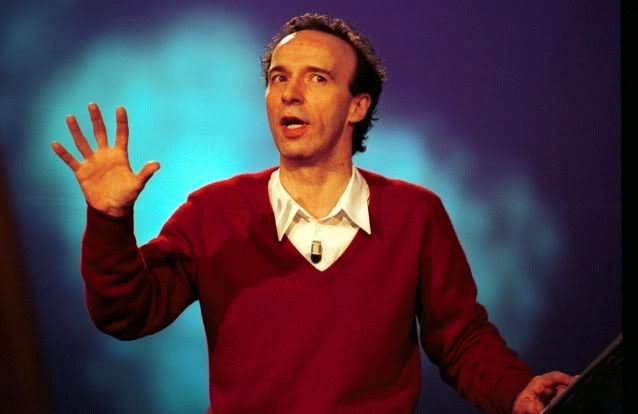
A conversation with Roberto Benigni

‘Only comedians can talk about death, life, God and Virgin Mary. If I was a tragic actor, I couldn’t allow myself. But I can talk with death in person because I am a clown.’


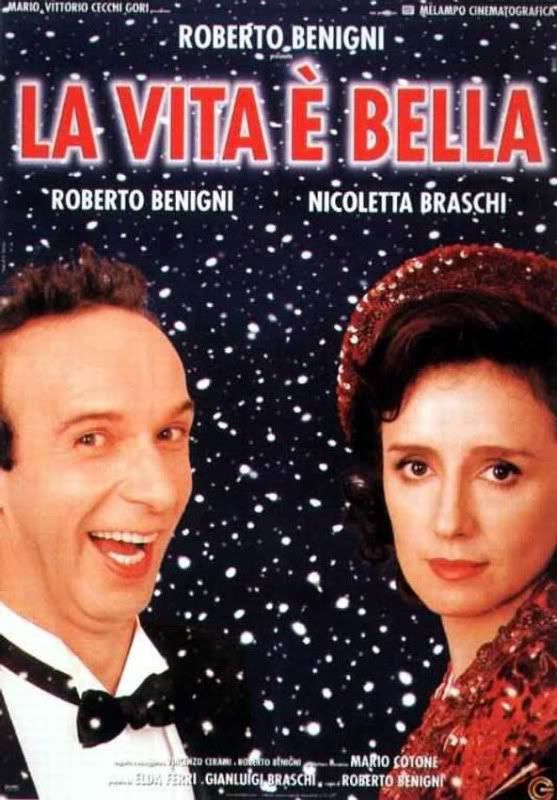
La vita è bellaI was extremely fortunate to interview Roberto Benigni recently for a piece about his show “TuttoDante,” which he is bringing on a short North American tour.

Here Benigni is best known, of course, for “Life Is Beautiful.” But he is also an accomplished Dante scholar. He has been giving public readings of the Divine Comedy in Italy for years, and since 2006 “TuttoDante” has been his main gig, seen by millions. In it he riffs on history, language and politics, and recites a canto from memory, in Italian. The tour opens in San Francisco on Tuesday and comes to New York on Saturday.

I met Benigni on May 21 at a hotel off Times Square. He was charming and uproariously funny, as you’d expect, but he was also one of the warmest and most down-to-earth celebrities I’ve met. He began by asking about my Italian heritage. I told him that my grandfather was born in the Aeolian Islands, and he said that once the mayor of Vulcano greeted him with a Sicilian marching band.

My tape begins in medias res ...

Do you get that kind of reception everywhere in Italy?

No, not like with a band. But in Italy, you know, people recognize me and they see me like a friend. They touch me. They don’t say, “Oh, Mr. Benigni ...” No, they touch me physically. They want to taste, physically, my body. When you touch somebody, it’s always a sign that you really like him.

You invite that, don’t you?

I use the body a lot. I hug people, I embrace, I want to touch. This is why I like so much to be on stage. That’s why I like the Divine Comedy, too, because the book is alive. For Dante Alighieri, the body is very important. It’s the only real body in the reign of shadows. So continuously he says “my body, my body, my body.” Also, in the Gospels the body is important. The resurrection is a sign of the body for Jesus Christ. This wonderful body, resurrected. “Touch me,” he says to St. Thomas, “touch me.” The body is as important as the soul. So it’s a sign of allegria, a beautiful thing.

OK, we start the interview. Thank you to be here again.

I’m honored to meet you. So tell me, why did you decide to bring “TuttoDante” to America?

My God. The United States is the goal for every show, of course. The United States is the show. In Europe and in Italy I decided to start very low-profile. I started three years ago in Patras, in Greece, just to try to do something that I loved very much. And the reception was so wonderful that I decided to continue, just to try. I was thinking, “Maybe I am going to lose some audience, but I’m doing what I really love.”

The Divine Comedy is one of my favorite things. So beautiful, full of image. It’s really a show. In my mind it is the most marvelous poem, the most glorious imagination of modern poetry. It’s like a friend to me. Dante Alighieri, you know, I really want to touch him, to call him by phone and say, “What are you doing tomorrow?” Because when I was reading the Divine Comedy, it was Dante Alighieri reading to me. This man, he knows me profoundly, more than any other body. So I said, this is a real friend, a close friend of mine. I was just going to ask the phone number for Dante Alighieri, to take a walk with him: “Hey Dante!” I really like him. He’s somebody we have to thank forever, for eternity.

So I decided to make it in Italy. And much to my astonishment, the audience increased, like for a rock concert. They were following me with Vespas in Florence. [Here I take out a DVD of one of his performances in Italy, from a series distributed through the newspaper La Repubblica.] Which number of this? The 11th. This was in Florence. You see the amount of people was like 6,000. The average of every show we did in Italy was 6,000 or 10,000. Sometimes in Siena and in Padua it was about 40,000 people. It was incredible. It was like for Springsteen, [with people] asking me for some cantos: “Hey Benigni! When are you going to act Paolo and Francesca, Count Ugolino?”

Were they there for Dante, or for you?

I cannot compare myself to Dante. But the way I present Dante, maybe the two things together: Benigni and Dante. I feel embarrassed to say these names together, of course. But there is something, a spark. Because I think people now need somebody who talks simply about life and death, about our destiny. These are the simple questions that everybody, at least once in a day, we have to ask ourselves. And Dante does this. He talks to us simply. It’s like to [look] in an abyss and see our secrets of life and death. And also because the goal of the Divine Comedy is beauty. The beauty. It is something that you present, like a peach tree. It’s modern, it’s ancient — what can you say about a peach tree? It’s a peach tree.

Why is “Inferno” the most popular part of the Divine Comedy?

I also did “Paradiso” on TV, the last canto, the most difficult, we can say incomprehensible. And there was the maximum of audience, 50 million people watching the last canto of “Paradise.”* They weren’t expecting such an enormous number of people watching TV for the last canto. It was really incredible. But I must say that “Inferno” is the most popular because it’s especially profound. It is unequaled for imagination, for emotions, for image and sound, like a movie.

In “Paradiso” there is some tercets, triplets here and there — insuperable. “Purgatory” in my opinion is the perfect cantica. It’s really mature. And the profound “Inferno” is unrivaled for the strength — la forza, the force — of the creation. Insuperabile. That is why I choose “Inferno” for this tour, especially Paolo and Francesca, which is the first circle of hell. And when I am here in New York it can remind me a lot of “Inferno,” in a good way ... [Chuckles.]

We know how to sin.

So it’s really very popular, and I decided to continue, and to come to United States. And now I am full of emotion because it’s my first time in United States with a show onstage. And you know, my English is not acceptable. It’s really revolting. First I decided to make the show in Italian, but you know it was something ... Now I don’t have time, and I am too old to study English in a correct way. So, as Dante did, I try to invent a new language. It is incomprehensible. [Laughs.]

PhotobucketBut anyway it is so healthy to talk about incomprehensible things, as Dante did. It’s very good for our health to talk about something that we cannot understand. We really need this. Like why need food for our body, this is a really wonderful food for our soul. Nobody talks about these kinds of things. Church in itself, they don’t talk about this. So we have to thank Dante that we have opportunity to talk about this kind of thing. And in New York, you know, this is the center of paradise and hell together.
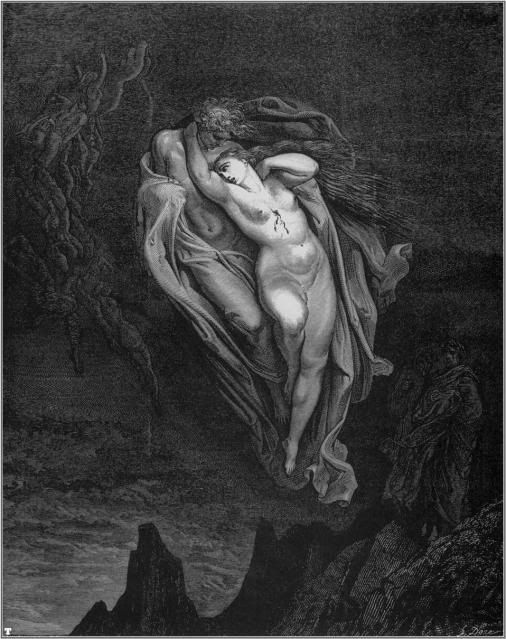
There are some things lost in translation, of course. But when I recite the fifth canto by heart at the end, it’s important to listen. We need to have the nerve to understand why a man with a big nose 700 years ago had the heroic shamelessness to write. Really this is the most daring, bold poetry ever. In 2,000 years of Christian poetry they never surpassed this. They never produced such a scandal of beauty. Never, never, nobody. Our planet is too little to allow the luxury of ignoring Dante. There is no other poet that put the human suffering and the human conscience at such a high point.

You said the poem is marvelous, glorious, heroic — but you didn’t say funny.

The title is Comedy. They added “divine” in 1555, but Dante called his work Comedy. Just La Commedia. Using low style. And he uses a lot of comic style. If you read the 21st, 22nd and 23rd cantos, it’s like Stan Laurel and Oliver Hardy, or Totò and Peppino in Italy. It’s like a farce. You really laugh. And there is the occasion to laugh a lot, especially in hell, in Inferno. Because in Purgatory you can smile, and in Paradise you don’t laugh — you just stay there to watch. How can you laugh when you see a rose blossom? You stay there in a stupor. And the stupor is the commencement of art. When you finish reading the Divine Comedy there is only one word you can say: incredible. When you read Shakespeare or Walt Whitman or some others, you can say, “This man is a genius; he is a genius and he’s really talented.” But for Dante, no. For Dante there is only one word: incredible.

Now I want to tell you, I don’t do commentaries or notes. I am not a literature or critical man, or a professor, or an emeritus professor. I am a showman and a comedian above all. So I am doing the show as a comedian can do it. Respectfully. But still I am a comedian, so I have to try to render it in a way popular and understandable. The show is very simple. There is only one man there, with a reading desk. We need the conversion of our imagination. Dante forces you to imagine everything. The stage is really full of devils, objects, animals, insects, monsters — and our soul is full of this. This is the stage. It is like a poem embodied with all this. And it is so deeply, psychologically spiritual. This is the strange thing, the strange mélange, the strange link that only Dante could dare to try things like this.

In the first part of the show I am, repeat, a showman. So I am improvising. That’s why I cannot use subtitles, because I never produce the same show. And also because everything Dante says is concerning us, very specifically. The first part of the show, I repeat, is about our times. Although all the great creators, they don’t write for their times. They write for everybody, always. They write in an eternal present.


Italians grow up on Dante. But do you think it will be difficult for Americans to grasp the details of the Comedy? When it comes to Francesca da Rimini, Guido da Montefeltro or whatever, doesn’t all that take more explanation?

It’s universal. Talking about Dante as [just] a Christian or an poet Italian poet would be to abate his universality. It’s not important to know where Ravenna is. Who cares? When I read Melville I don’t need to understand what kind of sea. No. Every single word of his book belongs to me. When you see “The Bicycle Thief” — Naples, Rome, who cares? It can be anywhere around the world. It’s there to convey the sentiment. Great poets, they invent sentiments. Everything in the Divine Comedy is expressed with emotion. And emotions are the same around the world. If we think like this, it’s thanks to people like Dante.

The image of Eros is changed after the Divine Comedy. The relation with women is changed also, because a character like Beatrice is insuperable. We cannot understand — unfathomable. All we know is the image of a girl. It is written in the eyes of this girl: “You are eternal.” Dante is really first the modern poet. He said that we are the masters of our life and death, of our destiny. Before Dante, no — we are guided by gods, like in Homer. With Dante starts the modern poetry, the modern human being.

In the first part I also talk about Berlusconi, which to convey is very easy. [Laughs heartily.] For Berlusconi the entire hell is not enough. We have to build another personal circle for Berlusconi. You know, Berlusconi, he passed a lot of laws just for him, just for one man. So maybe his punishment could be to build for him a circle in hell, but very personal, just for him: “Eh, this is just for you, Mr. Berlusconi!” [Laughs.] Or if I could do in movies this wonderful book, which is impossible, but as a comedy, a parody, I would like to find Berlusconi in every single circle. The lustful: Berlusconi is there. Fraud: Berlusconi is there. Or the corruption: Berlusconi there. Liars: Berlusconi is there. [Laughs.]

People say you used to be a lot harsher on Berlusconi. But it doesn’t sound like you’re any friend of his.

I am a comedian. And my duty is to joke with the people who have a lot of power. Berlusconi now in Italy, he has no power — he is the power. So it’s a duty for me now.

Are you still as political as you used to be?

Everything we know is political, directly or indirectly. Sometimes I am directly political, especially on TV, or on stage. So, I repeat, it is [slightly mocking tone] my duty to protect citizens from the powers, the governors. And for a comedian, Berlusconi is really a wonderful thing they gave me. “Benigni, you are very lucky you have Berlusconi ...”

We had Bush.

[Laughs.] Very good for comedy, Bush. And they were very good friends, Bush and Berlusconi.

Is Obama funny?

No. It is not the right word for Obama. I like very much Obama. Obama is really an illumination. Obama gave back to the United States the image that we had when I was young. But I believe in image. And the image of Obama is the image of beauty, in the poetical way, in a metaphorical way. It’s really a wonderful image.

He’s in the “Paradiso”?

He’s in “Paradiso,” for sure. But I like him because he is a real man. “Paradiso” but with some “Inferno.” That is good.

He smokes.

He smokes. And I don’t like just saints in Paradise; it’s very boring. So yes, some “Inferno.” Very good. That’s why I like him. He smokes, he plays cards.

Why did you decide to do Canto V on this tour?

Canto V is one of the most popular, very loved by Dantists, and above all by boys, ragazzi. [Benigni’s manager corrects his translation: “kids.”] They love it because he is talking about sex, passions and love. Telling us the roots of love. Can we fall into hell if we love somebody? It is a metaphor for the hell of our lives. If we take the sentiment in the wrong way, our entire life [becomes hell]. But Dante is never talking about love in a schmaltzy way. [Makes mushy sounds.] Very tough, very rude. No, not rude — rough. Love is the sentiment that moves the sun and the other stars.† So it’s a sentiment that scares you.

PhotobucketAnd the fifth canto is the first circle of hell. So it’s very good to tell because we enter hell physically, bodily. In order to tell the story it’s important to start from the beginning. And talking about the most important sentiment: love, sex, passion. Dante is very carnal. He is not a priest; he is a man. Nobody during the middle ages could write such verses, talking about bodies, describing when they make love. He is telling us about lust. And about women. The first name in hell is the very ancient empress Semiramide. And the first monologue is done by Francesca, who is another woman. Paolo and Francesca, they are together, embracing, but Francesca is talking and Paolo is there crying. It’s the opposite of what happens normally: man they are talking and female they are crying. Dante was very modern. And he wrote the poem in order to see again the girl he loved so much, Beatrice. And the last canto is about the woman for excellence, which is the Virgin Mary. So it’s a female poem.

And I chose the fifth canto because it’s beautiful. But every single canto is beautiful. The music, it’s not like Milton, or some poets [in whose works] the tune and the music is always the same for every character. Dante changes the music. To hear different styles of the rhythm and the music, it’s like to hear Beethoven and Duke Ellington together, or Bach and Jimi Hendrix playing together. It’s exactly like this.

You’ve been doing these readings for three years now. Do you want to continue? Is this what you want your main focus to be?

I would like to stop, but I am not able to stop. Because they ask for this show around the world — in Japan, in Korea, in South America. It’s incredible. Just for Dante Alighieri. I think I will continue in Italy because I left behind some towns in previous shows. So I go now to Verona. They ask for two more shows, that I did already three years ago, with 24,000 people. So have to I repeat. But then I have to stop. Because I would like to make not a divine comedy but a comedy — a movie. I would like to do a comedy very strongly. But I don’t have any idea because I am so completely so immersed in Dante, in the abyss of God.

After “Life Is Beautiful,” was it difficult to go back to making funny movies? Did that feel like a step back?

Of course my life changed a lot after “Life Is Beautiful.” It also changed the reception from other people to me. When I met somebody after “Life Is Beautiful” they treat me like a maestro. Before it was [big voice] “Hey, Benigni!” Then it was [little voice] “Oh, Mr. Benigni, how are you ...” They changed. [Laughs.]

Four years ago I was taking lessons for piano. That I liked. But I stopped because the man I called to have a lesson with, he called me maestro. [Laughs.] Said, “Maestro, put the hand here ...” No, maestro, you are the maestro! It was exactly after “Life Is Beautiful,” and I understood something was changing. [Big voice] “Hey maestro! Do re mi!” [Little voice] “Maestro, this is do ...”

Has that made things difficult in your career? How can you top it?

Ah, but this is good. This happens once in a life. I don’t want to repeat this moment. I just continue to make what I love. And the Divine Comedy I love very much. What I did before was comedies. This is the normality.

So you don’t want to do more serious roles. You want to do comedy.

In my life, everything I did, inside there was always something, you can call it profound, but this is not the right world. Something that goes that in the way of moving a little. Also in “The Little Devil,” or “Johnny Stecchino,” or “The Monster” — there was a vein of ...

Serious? Dark?

No serious, no dark. A little more profound. Something that goes inside, to touch for a moment. This has been my style. But in the beginning it was 90 percent comedy and 10 percent [the other side]. Now it is a little more 50-50. It’s my style. But we are going to find our style during our lives. So I start with this little part of more deep, then I go more 50-50 if can call deep what I’m doing. Something that can move. I feel this. I feel very sincere. Because I like it, when I go through Dante, through this immersion in this abyss, really, of God. I like to talk about this, and I can allow myself because I am a comedian. Only comedians can talk about death, life, God and Virgin Mary. If I was a tragic actor, I couldn’t allow myself. But with this accent I can do it. I can talk with death in person because I am a clown. Yes. And I am proud to be a clown — very much.

Italians know that you have another side to you. But I don’t know if Americans do.

In Italy they know that I am a real clown sometimes, but now they really are expecting from me something more profound. In the United States they know me only for “Life Is Beautiful,” which is a real tragedy. The style of “Life Is Beautiful” is not comedy. It is a comic body inside a real tragedy. Tragedy in two words is something that starts in a happy way and ends up in a very dark and sad way. And this is “Life Is Beautiful.” The Divine Comedy is called comedy because it’s the opposite: it starts in a very sad and terrible way and ends up with a happy ending. Happy because he is describing physically the face of God. And he telling us, “You are God.” He is describing your face, my face. Really this is shamelessness — incredible. [Laughs.]

How does it feel when you are doing the show?

I am full of emotion, of course. Because I am not able to find a way to be quiet there and to act in a professional way, like Laurence Olivier. I am always discombobulated. How do you say, when you are in a flurry, in tumult. Especially when you are physically in front of people. There is always something you cannot hold back, something you cannot manage. My feelings are ... great.

After “Life Is Beautiful” a lot of Americans expected that you would be making Hollywood movies. But the films you made were Italian, and they didn’t do very well over here.

Yeah, I know. Like my previous movies they didn’t do well here. Just “Life Is Beautiful.”

But I received a lot of offers, from the United States especially, also from France and from Spain, etc. Americans and Hollywood, they were very generous, especially giving me three Academy Awards. And I was sincere when I jumped on chairs. Because I tried to fly. For the surprise. I didn’t really expect my name to be told by Sophia Loren, screaming “Roberto!” And in order to demonstrate my gratitude, with all my exuberance I tried to fly, really to fly. Because this was like a big kiss, an embrace.

I received a lot of offers, sometimes to make a sequel of “Life Is Beautiful” or something related to the concentration camps, or during this period of history. Never in my life will I do this, never. And they offered me a lot of money. [Sleazy voice] “So, do a sequel ...” My God, you have to torture me, torture me. I received many, many subject ideas about this. Some were interesting. But I can’t, I can’t. Really, I can’t.

Or sometimes they offered me the cliché of Italians: the pizza man, the mafia man in a parody of the mafia, or fireworks with Italians in United States, with the south Italy family. But I am not south Italian. I like very much the south of Italy. But I am well known in Italy as Tuscan. And to find a character for a comedian is not that easy sometimes. We talked about a project with Jim Carrey, who I respect and like very much. Or Robin Williams.

I also received offers from many major companies to stay here in the United States, in Hollywood, to write with somebody. They give me a little house there to study, to write. But what can I do? My roots are in Italy. My life is there. I prefer to continue my life, to try to have a normal life, to do what I like. Maybe sometimes I have been wrong with some movies. Maybe “Pinocchio” didn’t receive the success I was expecting. Maybe something was wrong. Anyway, I try to do my best. I was sincere. I was honest. But I am sure this path that I took is the right path.


I still think of “Down by Law” ...

Ahh, it was beautiful.

... as a definitive moment in your career, as the Italian guy in America who doesn’t really fit, but you do your thing anyway.

Thank you. You’re right. This was another magic moment. Not easy to repeat. It happened one time, with Jim Jarmusch. He is a kind of director who is so respectful for foreign cultures, and he is a very cultivated man. My friendship with him is very close still. Once a week we call each other.

I talked to him the other day, and he said that over the years he has written a number of things with you in mind, but none of them happened. Why not?

I was busy with something, he was busy. But we did “Night on Earth.” It was tentative with another. I think we will do something again. There is a great feeling between me and him. But to repeat this character Roberto from “Down by Law” ...

About Dante: You said you view yourself as primarily an entertainer, not a professor. But clearly you know this subject very, very well. What sort of research or preparation do you do to talk about this for two hours?

My God. First of all, when you like something it’s easer. I really like Dante, so I read everything I find about him. I read a lot of commentaries, notes. And I also read aloud. Because it explodes the cosmos of illumination when you recite aloud. And I study the way to recite the canto at the end, because I am an actor above all. I am not a Dantist. When I do the commentary I try to be right, the way that I like. Because commentaries about Dante, there are billions. It is not enough, an entire life, just to read commentaries about one canto. There are really buildings of books about Dante.

I try to recite in a way that nobody did before: very simple, putting me behind Dante, not in front of him. Actors, normally when they recite Dante, they put themselves before him. Me, I am back, low-profile.

Is that difficult? I can’t imagine you being low-profile.

No, no. Because in this case, with the low profile you explode. You explode. You present the beauty, so you are part of this beauty. Otherwise you are a shadow of Dante. Putting me in the shadow of Dante, I become illuminated. It’s like a candle trying to illuminate the sun.

[Here Benigni discusses some technical, phonetic details of his performance, including how he pays close attention to individual syllables and the accents of each line, and particular aspects of Tuscan pronunciation.]

You know, in the United States there are the greatest Dantists in the world, more than in Italy. It’s incredible. Each year there are 20 translations of Dante in English, and 15 are from the United States. Last week I received a translation from Korea, from a professor. No joking. I can show it to you. If you see my room in Rome, I have a room only with translations of the Divine Comedy from around the world. “Try to read this, why don’t you come...” The latest is in Korean, and also in vernacular. Because Dante wrote not in Latin but in the vernacular language.

PhotobucketYou use the Hollander translation. Why do you use that one?

In the United States there is Pinsky, Mandelbaum. My God, you have really great translations, maintaining the triplets, or blank verse. But Hollander my favorite because he not trying to write a book in his notes. Many, many commentators, they write another book with their notes. The most serious, mature way to look at Dante at this moment, in my opinion, is Robert and Jean Hollander. I did for Robert Hollander — he translated “Paradiso” — I did an introduction for him.‡ My introduction was very funny, it was not serious. It was a letter to Dante, asking if he received the rights — money. Because everybody now is talking about him, and maybe he’s not receiving money. His money goes to the society of rights, and I don’t know how they use this amount of money. And poor Dante, he’s now in Purgatory ...

Really?

Yes. He put himself in Purgatory, with the superbos [i.e. the prideful]. “I am the best.” He put himself there. He is really a superbo. He knew that he was the greatest poet. So he knew his position was amongst the pride.

Anything in particular that you’re hoping to teach Americans about Dante?

I am not here to teach. I’m here to make a show. There is a difference. What I am repeating is the Divine Comedy is beautiful. This is my end. We can live without reading the Divine Comedy. We can live also without seeing the ocean, but it is better if you see it once. My God, you see only lakes. You say, “My God, the ocean.”

I am full of emotion to be in the United States. Because there are some cantos in hell where he is describing Los Angeles when you are landing, or New York.

What parts remind you of New York?

Oh, la bolgia ottava, the 26th canto — full of little lights when he is landing, looking from a skyscraper like this, looking at the bolgia — infinite lights, traffic, people. The fraud. Describing like a landing in New York or in Los Angeles. We can think that Dante flew in the Middle Ages, because he is describing a landing. [Getting up from his seat, growing more animated.] And the 26th is also when Ulysses goes in the mountain in Purgatory, and it is set in the United States 200 years before Columbus. Because he is describing the journey of Ulysses with his friends in the ship. They go and the direction is Spain: left, south-left, south-left. And describing the moon and the other part of the planet, the equator. They go exactly there. It’s San Salvador — about Florida. In Florida before Miami, there is the mountain of Purgatory. He has described the new world there. If you read it, it’s unbelievable. So it’s related very much to the United States.

In the 26th canto, Dante describes the lights like fireflies, like a farmer who sees billions of fireflies. And every single firefly is hiding a fraud — people like Madoff. Very cunning, very shrewd. These people are hiding inside the flame because they are hiding in life. The Florentines, you know, they invented finances. The fiorino — in the Middle Ages it was like now the dollar, for the change ...

Banca ...

Banca, exactly. Banca rotta is from Italian: bankrupt. Rotta means break. It’s a single word, invented during this period, from Florence. When they couldn’t pay they came and they broke the banks: banca rotta, broken bank. When you go to the bank now and they destroyed everything, this is bankrupt: rotta la banca. So finanza is a Florentine name. The first time people started to make money back from money, from nothing, that now we are ruined for this. Change, cambio, credito, casso — it started during Dante.

Caro Ben — I thank you very much.


* He may be exaggerating here. According to my Italian sources, his first reading, in November 2007, had about 10 million viewers, a 36 percent share. Others, which aired late at night, averaged 2.2 million. That may not be 50 million (the entire population of Italy is only 60 million), but it’s still huge.

“L’amor che move il sole e l’altre stelle” (“Paradiso” XXXIII.145), the last line of the Divine Comedy.

‡ Actually, according to Hollander, it was for a special Italian edition of “Inferno.”

Ancient history: Thurston Moore, Al Green, Lou Reed, M.I.A., Stew.